

I’ve always been somewhat fascinated by, not just the match attire of football teams, but also the other gear such as training-wear and pre-match garb. Once a year, FA Cup finals offered the promise of never before seen track tops, walk-out jackets, presentation suits, whatever you prefer to call them, and I’ve always like ‘anthem jackets’. It made me ponder “when were jackets or tops first used before a final?” and “how has the tradition developed over the years?”
So I decided to do a deep dive into the subject, and here broken into five parts is as comprehensive as I can make it exploration into what teams have worn, and sometimes not worn, before the start of the final tie of the Football Association Challenge Cup each year, and on The Football Kit Podcast we recorded an episode to discuss the matter even more.
I feel that this is a living document, one that will keep being updated as new finals are played and previously unknown information reveals itself, but for now here’s all I know about FA Cup final jackets – Les (les@tigernation.co.uk)
Menu
(Part 1: 1955-1970) is below.
Part 2 covers 1971-1985. It’s HERE
Part 3 covering 1986-2000 is HERE
Part 4 covering 2001-2015 is HERE
Part 5 covering 2016-2023 is HERE
The Football Kit Podcast episode 28 will appear HERE soon.
Overview
It’s a familiar, almost comforting image… two teams emerge from the Wembley tunnel into bright sunshine, both clad in zip up jackets made from a petroleum by-product.
Each team stands in line, with the captain introducing his players to a Duke, or a Princess, maybe even the Monarch, who can’t see that the reverse of the jacket advertises a Danish brewery or a Japanese technology firm.
When though did this type of garb join club blazers or Savile Row suits as a traditional part of the cup final pageantry? Let’s see if we can find out…
1955 FA Cup Final

As far as we can tell, Manchester City were the pioneers, walking onto the Wembley pitch in blue sweatshirts with white yoke panels, an inset V neck attached to polo collars, and a thin white stripe down each arm. They were matched with loose fitting jogger bottoms. What did Prince Philip make of this pre-game outfit we wonder? For their part, Newcastle came on to the pitch ready for action in just their playing kit, and the Geordies left Wembley with the cup after a 3-1 victory.
Manchester City reached the final a year later, a game remembered for German goalkeeper Bert Trautmann pulling off numerous saves despite sustaining a broken neck against Birmingham City. Both sides wore change kits, with Manchester City donning their now famous maroon and white shirts, though they didn’t wear pre-game sweatshirts and joggers as they had in 1955.
1959 FA Cup Final

Four years after the first pre-game ‘tracksuits’ were worn, both cup finalists lined up to meet the Duke of Edinburgh at Wembley in them. Luton Town wore quarter-zip sweatshirts with wide point collars and elasticated waists. The club crest was embroidered onto white cloth that was sewn on the left chest (as worn). Baggy bottoms completed the look. Their opponents won the warm-up suit style war though…

Nottingham Forest went to the trouble of adding commemorative game detail, with ‘Wembley 1959’ below the zip pocket, above which N.F.F.C was embroidered. That choice made them style winners as well as cup winners, they defeated Luton 2-1.
1960 FA Cup Final

The practice of wearing ‘suits’ instead of just jackets was continued by Blackburn Rovers in 1960, when they faced Wolves, who eschewed pre-matchwear. Rovers’ quarter-zip pullovers featured white contrast collars, zip-up pockets on the left breast (as worn) above sewn-on crest patches attached to a quarter-zip, Style points didn’t lead to goals though and Wolves ran out 3-0 winners.
1961 FA Cup Final

Tottenham became the first side to just go with just jackets in 1961, and when the Duchess of Kent met the Spurs line-up at Wembley they were resplendent in white full-zip jackets with a navy stripe down each arms to match navy collars and cuffs. The Spurs cockerel was embroidered with WEMBLEY 1961 curving beneath it, and on the back of the jackets, large navy letters spelled out SPURS. There’s a great look at these jackets in this YouTube clip. Tottenham also had distinct ‘warm-up’ jackets that were similar, but they had a shield around the cockerel like the match shirts.
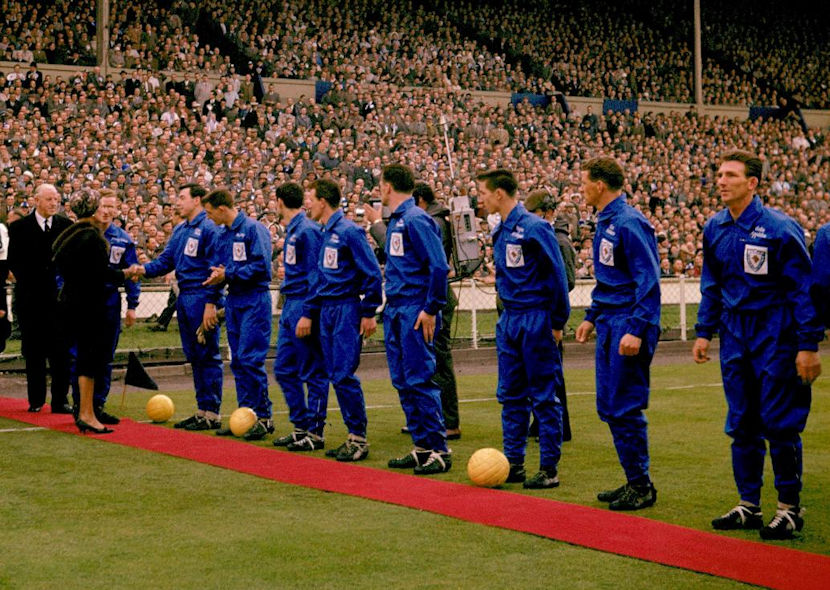
Opponents Leicester City went with full suits, royal blue with self-coloured collar, cuffs and waistbands on the full-zip jackets, which had each players name embroidered above a zip-up pocket, and sewn on crests underneath.
Spurs won the game 2-0, to add the cup to their league title triumph, becoming the first club since Aston Villa in 1897 to win the Double.
1962 FA Cup Final
Spurs started the ‘just the jacket’ look in 1961 and repeated the trick a year later when they returned to Wembley to face Burnley. who got the memo and also eschewed jogging bottoms.
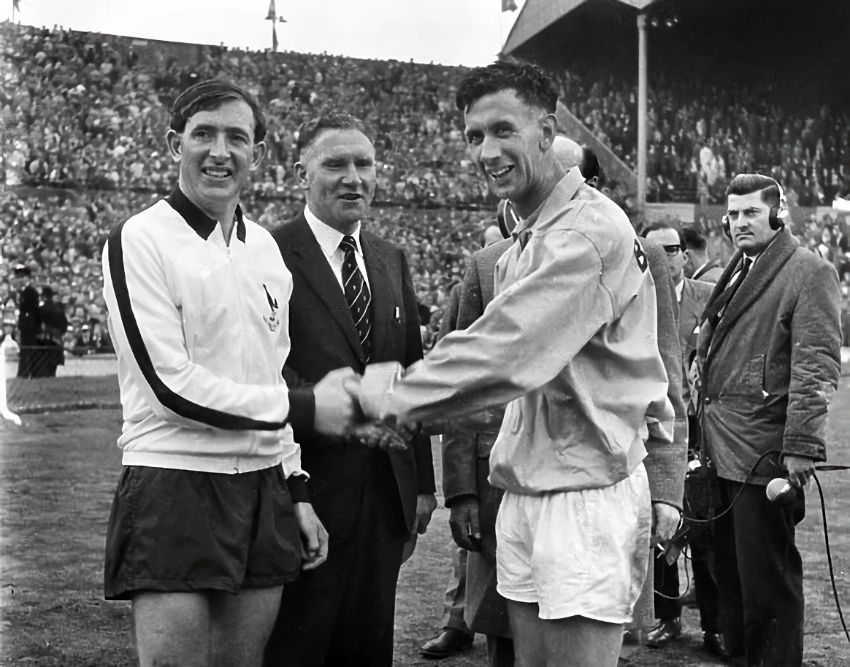
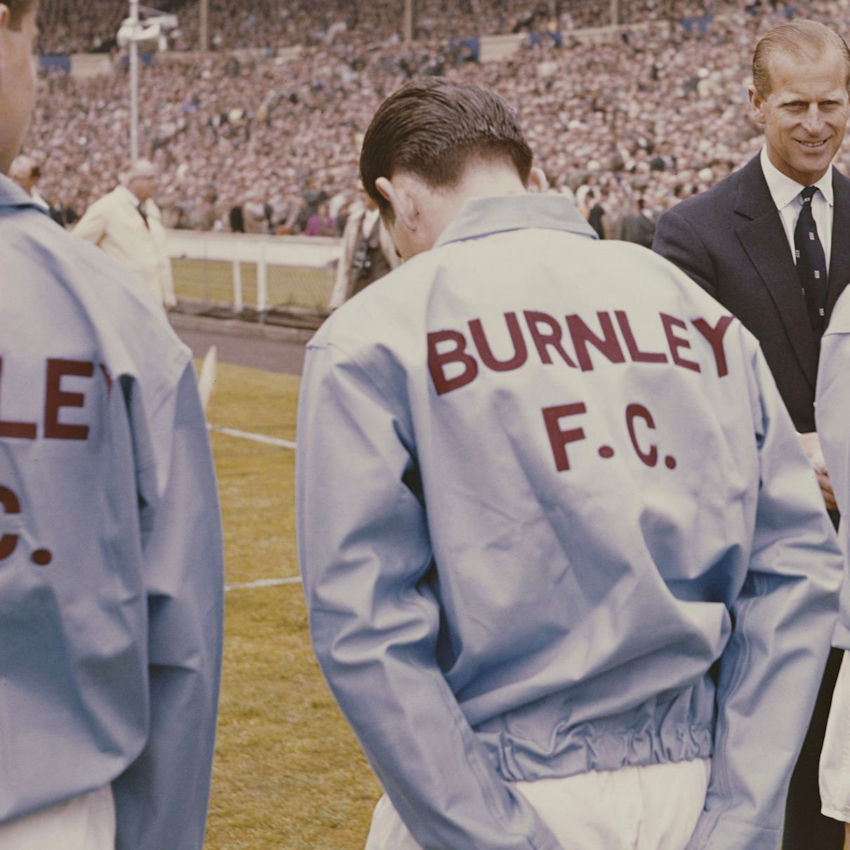
Spurs’ 1962 jackets were not total facsimiles of the 1961 versions, naturally the year was updated on the embroidery underneath the crest but these had flatter waistbands than the first iterations. Burnley’s pale blue jackets were stiffer looking, with self-coloured collars and waistbands, they lacked any detail on the front of the jackets, but on the reverse claret letters spelled out BURNLEY F.C.
Spurs won comfortably, winning 3-1 in a game dubbed the ‘chessboard final’ as caution and patience were favoured over attacking adventure and excitement.
1963 FA Cup Final
Fully tracksuited in 1961, Leicester rejected any pre-match garb the next time they reached the final in 1963, emerging from the tunnel in just their all-white match kit, though they did have track jackets for the occasion, more on this in a moment.

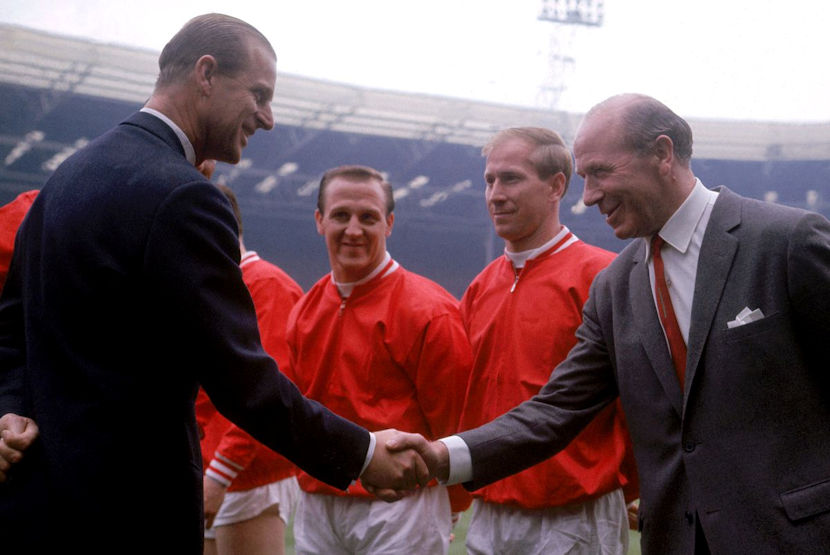
Manchester United could be relied on for some sartorial elegance, and they took to the field in red full-zip jackets that had white crew collars decorated by one red stripe, and white cuffs with two red stripes. There was no crest or game detail on the front but the reverse of the jackets had MANCHESTER in arching white letters over UNITED which was applied straight. United won 3–1, with a goal from Denis Law and two from David Herd, lifting the trophy for the third time.
Back to Leicester, who it emerges did have track jackets to wear, they just decided against it. The world was done a disservice, as the jackets they elected not to wear were MAGNIFICENT! Made by Nottingham firm Redmayne and Todd, the royal blue jackets had a white neckline with a thick blue stripe, a look repeated on the cuffs and waistbands which had room for multiple blue stripes. On the front of the jackets player names were embroidered above a zip-up pocket, and the club crest was added as a patch with WEMBLEY 1963 underneath.
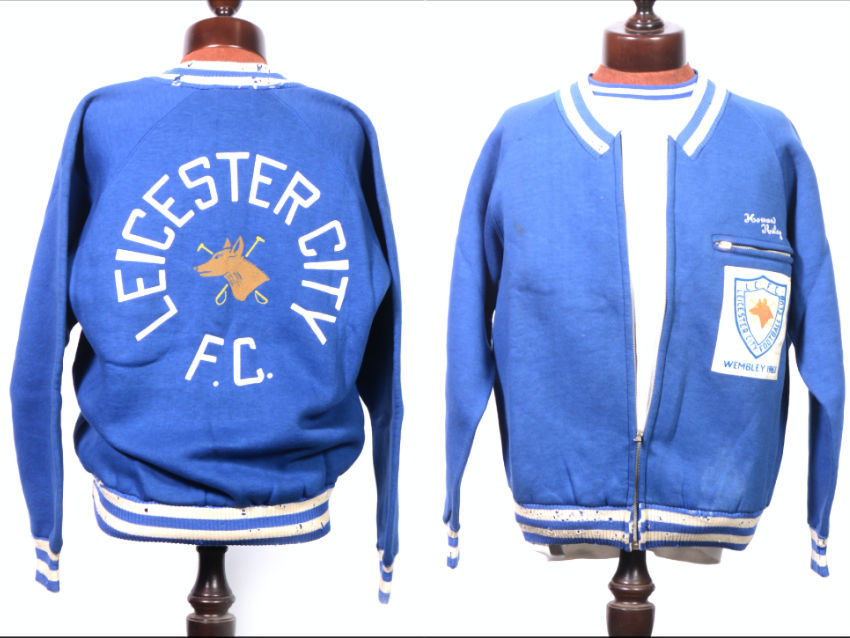
The back of the jacket has the most spectacular decoration however, with a foxhead crossed by riding crops encircled by LEICESTER CITY F.C. in white text. Maybe superstition played a part, but not using this was a poor decision, and the jackets seem to have been used for training in subsequent years and worn to bits instead of being treated like treasured artefacts.
1964 FA Cup Final
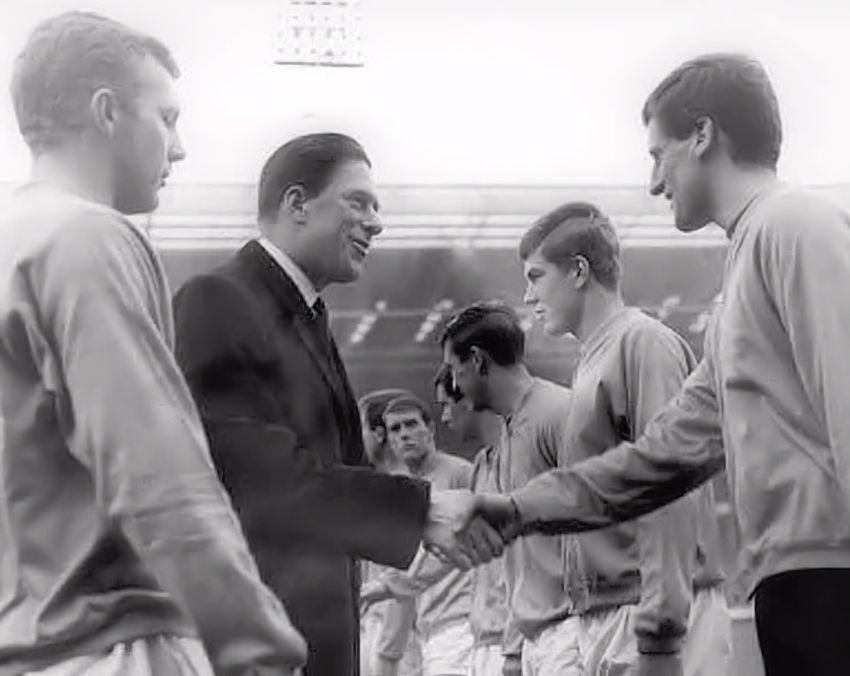
There are curiously few images of what West Ham wore before kick off in 1964, when the Hammers won their first FA Cup. This picture suggests lightweight zip-up jackets with no crest or game detail, and we’re presuming they are light blue in the absence of contradictory evidence.

Preston’s walkout get-up? That we know more about. Drill tops with button up plackets that extend to the belly. This video on YouTube shows club name text on the back but we don’t know if’s that’s PRESTON NORTH END or an abbreviated form. Second Division Preston’s Howard Kendall became the youngest finalist at 17, a record that stood until the early 1980s.
West Ham, captained by Bobby Moore and managed by Ron Greenwood, won the match 3–2 to win the FA Cup for the first time.
1965 FA Cup Final

Both sides wore anthem jackets in 1965, when Leeds made their FA Cup final debut, whereas it was Liverpool’s third appearance in the showpiece game.
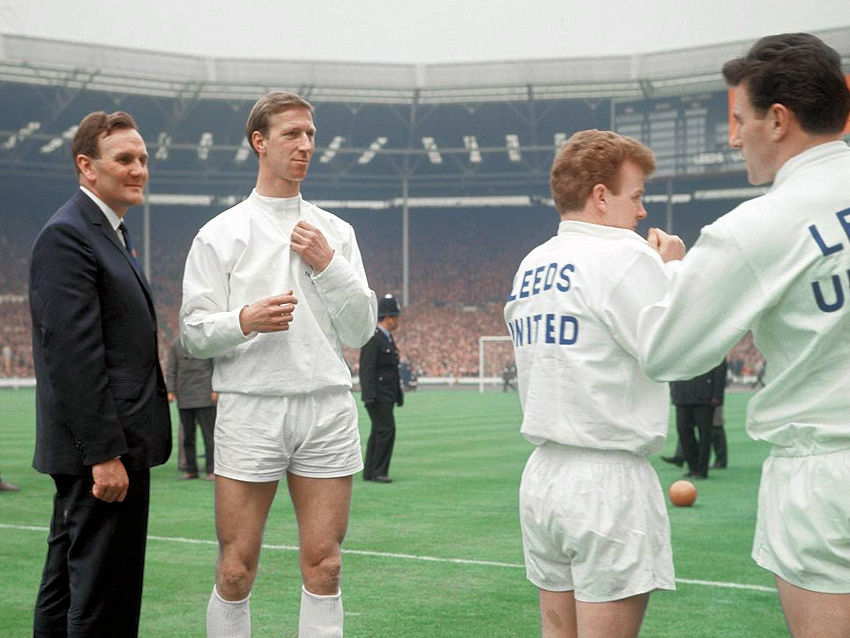
Leeds opted for collarless pullover tops that had a placket panel with a Velcro fastener at the top. The short lived ‘perched owl’ crest is on a sewn on patch with F.A. CUP FINAL 1965 underneath. On the back, chain stitched blue letters read LEEDS UNITED.
Thanks to Ben Hunt of https://theleedsunitedcollection.co.uk/ for confirming Velcro as the fastening mechanism.
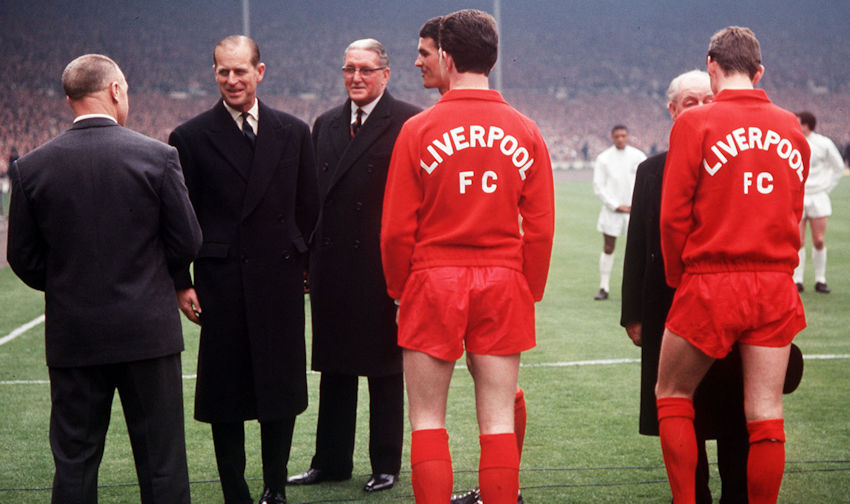
Liverpool went with full-zip jackets with self-coloured collars, cuffs and waistbands, and there was no club crest or game detail on the front. On the back though LIVERPOOL arched over FC in white letters. 0-0 after 90 minutes, the game came to life in extra time, when the Scousers won 2-1.
1966 FA Cup Final

Everton became only the second side, after Blackpool in 1953, to come from two goals behind to win the cup without needing extra time when they triumphed for a third time in 1966. The ‘Toffeemen’ wore blue sweatshirts with self-coloured triangular inset panels under the crew neck when meeting Princess Margaret.

There was no club crest or game detail on the front but the reverse had EVERTON gently arcing over FC in white letters.

Sheffield Wednesday went with full-zip jackets featuring modest Umbro double-diamond branding on the chest, which likely makes the first team to have conspicuously branded cup final tops. On the back, OWLS was added in white sewn-on letters.
1967 FA Cup Final
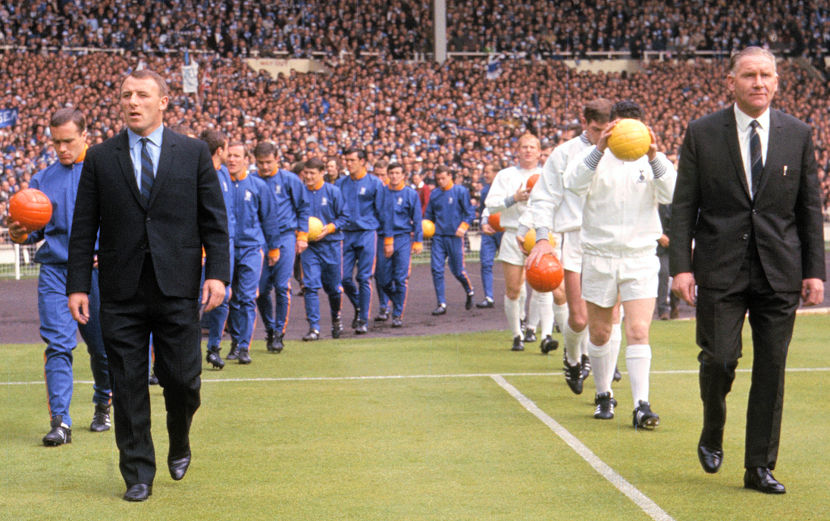
Tottenham and Chelsea faced off in a battle for the capital in 1967, a game sometimes referred to as the ‘Cockney Cup Final’. Chelsea opted for full ‘tracksuits’ when they emerged onto the pitch, a look not seen since 1961 when Leicester wore blue bottoms. Their full-zip jackets with amber crew necks and cuffs had the rampant blue lion regardant (looking backwards) while holding an abbot’s crozier (staff) logo on the chest with CFC underneath, but no reference to the game or venue. The pleated blue bottoms had an amber stripe running the full length of each leg.
Spurs, wearing all-white for the final, went just with jackets, which had multistriped navy and white crew collars and cuffs. Underneath the embroidered-cockerel-on-a-ball club crest a scroll contained WEMBLEY 1967 text. As with the 1961 and 1962 jackets, SPURS was sewn onto the back in navy lettering. Tottenham won the match 2–1, their fifth cup triumph overall and a third of the decade
1968 FA Cup Final

The 87th FA Cup final was contested by Everton and West Bromwich Albion, with both sides wearing away kits since both played in blue and white. West Brom wore lovely white anthem jackets with subtle navy crew necks and thin navy stripes down each arm, which visually connected to the navy zipper. A Union flag featured where you might expect a maker’s mark nowadays, opposite the club crest that was not embellished with game or venue detail.

The waistband was navy on the front but white on the back. The most striking detail on the reverse was WBA in large keylined letters.

Everton again opted for drill tops instead of zip up jackets, and these had a white tapering panel that squared off at breast level, and at the top it became a crew neck and stretched around the back. Everton had won both league fixtures with West Brom in 1967/68, but that proved no omen for the cup final.
1969 FA Cup Final
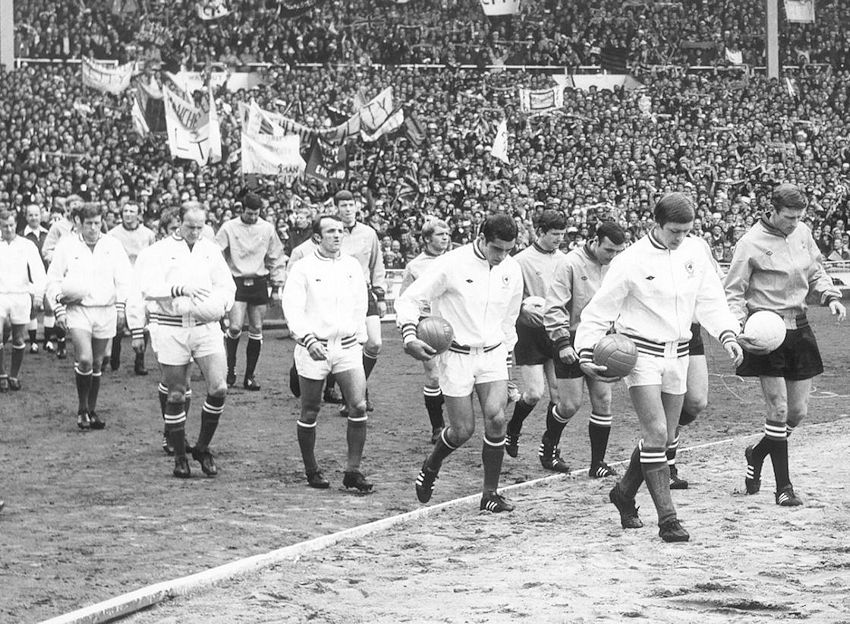
Both sides changing in the event of a kit clash was the done thing in the FA Cup, as evidenced by West Brom and Everton’s attire in 1968, however when Leicester City and Manchester City faced off in 1969, only the Citizens changed, in Malcolm Allison’s favoured red and black stripes, while Leicester went with familiar blue and white. That wasn’t immediately obvious however, as both sides entered the field in shirt obscuring track jackets.
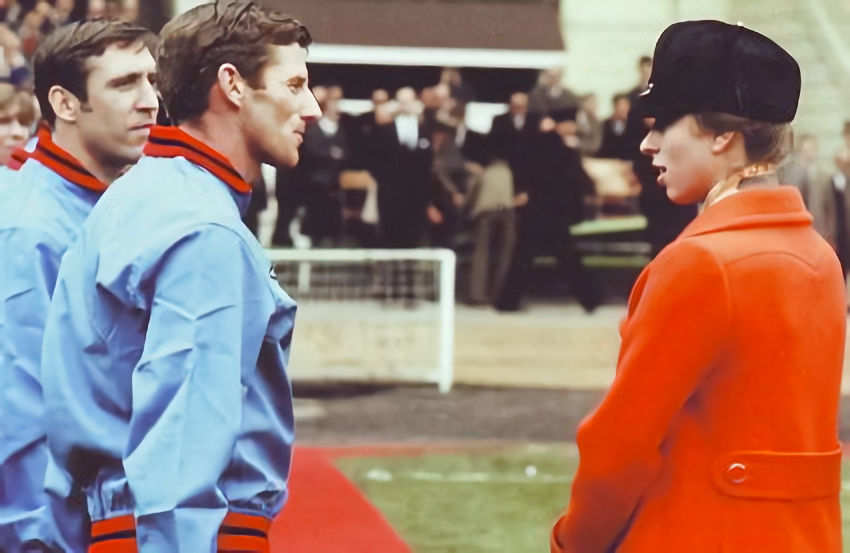
Manchester City’s Umbro jackets were sky blue featuring a red folded rib collar, cuffs and waistband, each bearing a single black stripe. The heraldic emblem of the city of Manchester was embroidered on the left breast (as worn) over a scroll containing ‘WEMBLEY 1969’, on the right breast was a small Umbro diamond, the filled in version used in the 60s. There was no design on the jacket’s reverse.

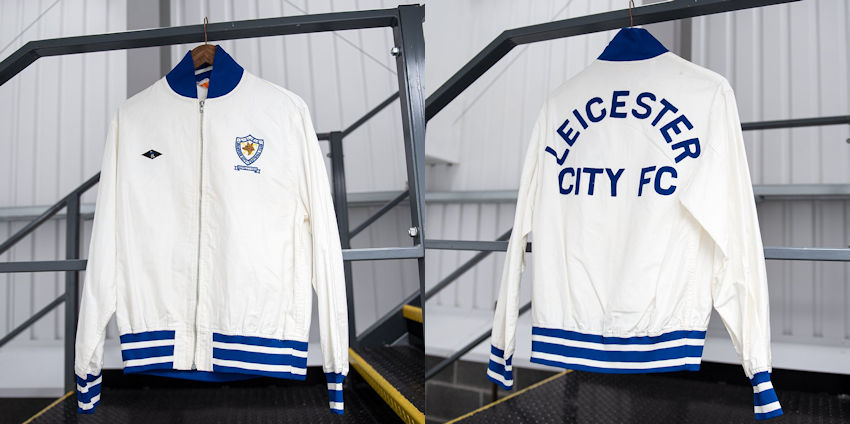
Leicester decided to wear the jackets prepared for them this time round, though they were white and not predominantly blue. They had a collar that was just blue if worn up, but when folded a single white stripe was visible, while the cuffs and waistband were blue with two white stripes. A scroll bearing ‘WEMBLEY 1969’ was situated underneat the club crest, and rather than the filled in Umbro diamond, these bore the wonderful alternate logo of a diamond containing a footballer made up of the stacked letters U, M, B, R & O.
1970 FA Cup Final

John Terry has said that he is so averse to the colour red that he’d flick the switches on electrical sockets at Chelsea’s training ground up to hide red text. Which is to say that John Terry is ignorant of Chelsea’s kit history, as they’ve periodically used red as a tertiary colour, and multiple club crests have featured the tone, from the red Abbott’s crozier held by the rampant lion (1967-1986), a red lion on the badge (1986-1995), and the red roses and footballs used on the crest introduced in 2006 and still in use. One of the most notable uses of red by Chelsea was their 1970 cup final track jackets for the tie against Leeds United that went to a replay.

Both sides wore the same style of Umbro jacket, but in different, perhaps unconventional colourways. Chelsea’s red jackets had blue and white stripes on the collar, cuffs and waistband, and featured the filled in Umbro diamond, an embroidered club crest above a scroll with WEMBLEY 1970 inside. On the back of the jacket, CHELSEA was spelled out in blue letters.
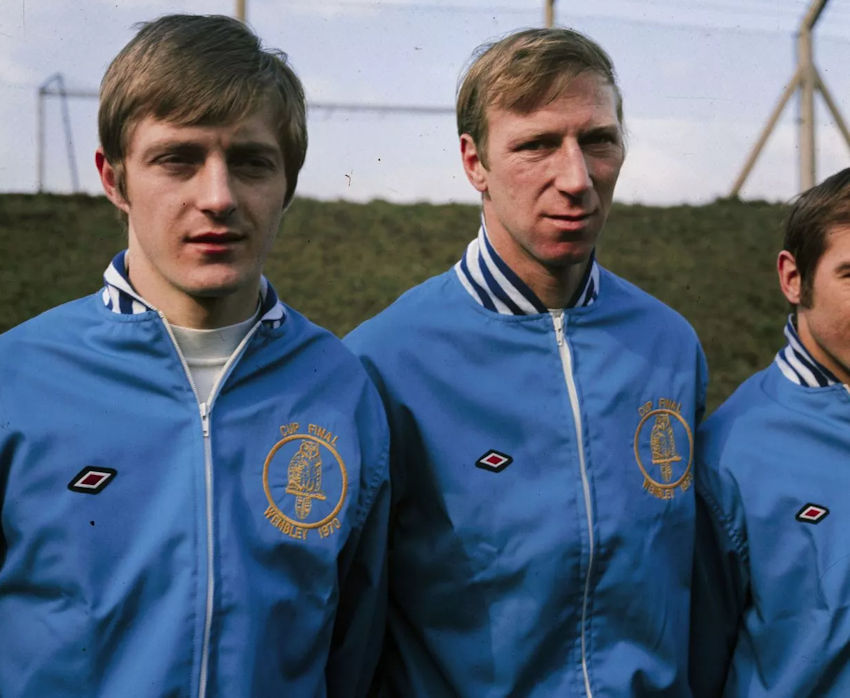
As for Leeds, their jackets were a lighter blue than you associate with the club, though a darker blue was on the collar, cuffs and waistband as stripes contrasting those in white. The filled in Umbro diamond added a flash of red, which vaguely visually tied in with the red socks Leeds wore in the first game at Wembley, and of the left breast (as worn) the perched owl in a circle was embroidered in yellow, as was text above CUP FINAL and below WEMBLEY 1970. There was no club name on the back of the jacket.
The last April final, and the first since 1912 to need a replay, an ill tempered tie ended 2-2 at Wembley before a replay at Old Trafford. In that game Chelsea wore yellow socks and swiched to blue shirts with the crest and numbers also in yellow. Chelsea won the replay 2-1 after extra time, their first FA Cup success.
 HULL CITY KITS